
ScoreClimb Loan App Review 2025: Is ScoreClimb Loan Fake?

In the fast-evolving world of digital finance, apps like ScoreClimb – Credit Growth promise to help users manage their credit scores and improve their financial health. Marketed as a credit score improvement platform for Indian users, ScoreClimb claims to offer instant credit score access, detailed financial insights, and personalized tips to boost creditworthiness. However, user reviews from 2025 paint a troubling picture, alleging that the app operates as a 7-day high-interest loan app with predatory practices, hidden fees, and even blackmail tactics. In this SEO-friendly review, we dive deep into ScoreClimb’s features, customer experiences, and red flags to help you decide whether it’s a legitimate tool or a scam to avoid.


What Is ScoreClimb – Credit Growth?

ScoreClimb presents itself as a financial app designed to empower Indian users by providing tools to analyze and improve their credit scores. According to its Google Play Store description, the app offers:

  • Instant Credit Score Access: Check your credit score and track changes over time.
  • Detailed Financial Insights: Identify financial weaknesses with personalized tips to enhance your credit profile.
  • Credit Report Analysis: Understand how your financial decisions impact your credit score.
  • User-Friendly Interface: A simple design for easy credit management.
  • Data Privacy and Security: Advanced encryption to protect user information.
  • Credit Score Detail List: Analysis of phone numbers, emergency contacts, and ID card information against a blacklist.

While these features sound promising, the app’s actual functionality seems to deviate significantly from its claims. Many users report that ScoreClimb operates as a short-term loan app, disbursing small loans (often without consent) with high interest rates and aggressive repayment tactics.


How Does ScoreClimb Work?

ScoreClimb encourages users to register by providing personal details such as phone numbers, email addresses, PAN, Aadhaar, and even access to contact lists and galleries. Once registered, users can view their credit scores and financial insights. However, the app allegedly uses this access to:

  1. Disburse Unsolicited Loans: Users report receiving small loan amounts (e.g., ₹1,800 for a ₹3,000 loan) without applying for them.
  2. Charge High Interest Rates: Loans come with steep interest rates (often exceeding RBI guidelines) and hidden fees, deducted upfront.
  3. Enforce Short Repayment Periods: Loans must be repaid within 5-7 days, contrary to the app’s claim of flexible terms.
  4. Engage in Harassment: If repayments are delayed, users receive threatening calls and WhatsApp messages, including blackmail with edited images sent to contacts.

These practices have led to widespread allegations that ScoreClimb is a fake loan app masquerading as a credit growth tool to evade Google Play Store scrutiny.


Customer Reviews: What Are Users Saying in 2025?

Customer reviews from April 2025 reveal a consistent pattern of negative experiences, with many users labeling ScoreClimb as a scam. Here’s a summary of the key complaints:

1. Unsolicited Loans and Hidden Fees

  • Amit Bagri (22 April 2025): “They applied for a loan of ₹3,000, but only ₹1,800 was credited. They demand repayment of the full ₹3,000. After repayment, a larger loan (₹6,600) is automatically disbursed, trapping users in debt.”
  • Injamamul Hoque (17 April 2025): “After logging in, ₹3,000 was disbursed, but only ₹1,800 was credited. They asked for ₹3,000 repayment, and after paying, another ₹4,000 was disbursed automatically.”

2. High Interest Rates and Short Repayment Periods

  • Venkat Vutukuri (21 April 2025): “For a ₹3,000 loan, only ₹1,200 is credited, and you must repay the full amount in 5 days, not 7 as claimed. Customer care starts calling a day before the due date.”
  • Mohd Faiz (21 April 2025): “They process loans with high interest for just 7 days. There’s no proper repayment system, and rude people blackmail users.”

3. Harassment and Blackmail

  • Manohar Kr (13 April 2025): “After repaying loans, agents using Pakistani numbers threatened me on WhatsApp, edited my gallery images, and sent them to my contacts. Customer care and email don’t work.”
  • Selvam K (26 April 2025): “They share nude photos to contacts and blackmail users for payment. Payments aren’t reflected in the app, and contact details are fake.”
  • Himanshu Shakya (23 April 2025): “A fake number demanded repayment, abused me, and blackmailed me with my uploaded selfie, threatening to share it with my contacts.”

4. Fake Customer Support and Agreements

  • Praveen Rufus (13 April 2025): “No option to cancel a loan, and customer care is unresponsive. The number doesn’t work.”
  • Naveen Eppili (5 April 2025): “The agreement is fake—no name or signature. Customer care is nonexistent, and they access your contact list.”

5. Data Privacy Violations

  • Vinay Kumar (27 April 2025): “They accessed my data and harassed my family and friends without me taking a loan. They edit photos and post them on social media.”
  • William Harris (26 April 2025): “After repaying a ₹6,000 loan, an outstanding balance of ₹11,500 appeared. I can’t contact support or delete my profile.”

These reviews highlight serious concerns about ScoreClimb’s legitimacy, with users reporting financial losses, emotional distress, and privacy violations.

score climb loan app

Red Flags: Is ScoreClimb a Scam?

Based on user reviews and industry standards, here are the major red flags associated with ScoreClimb:

  1. No RBI Approval: There’s no evidence that ScoreClimb is linked to an RBI-registered NBFC or bank, a key requirement for legitimate loan apps in India.
  2. Unsolicited Loans: Disbursing loans without user consent is a common tactic used by fake loan apps to trap users in debt cycles.
  3. High Interest Rates and Hidden Fees: Deducting large upfront fees (e.g., ₹1,200 for a ₹3,000 loan) and charging exorbitant interest rates violate RBI guidelines.
  4. Short Repayment Periods: Forcing repayments within 5-7 days is a hallmark of predatory 7-day loan apps.
  5. Harassment and Blackmail: Threatening users with edited images and contacting their friends/family is illegal and unethical.
  6. Fake Contact Details: Unresponsive customer care, non-functional numbers, and invalid email addresses are common in scam apps.
  7. Data Misuse: Accessing contact lists and galleries without clear justification raises serious privacy concerns.
  8. Fake Agreements: Providing agreements without signatures or legal details is a tactic to deceive users.

These red flags align with warnings from the Reserve Bank of India (RBI) and cybersecurity experts about fraudulent loan apps that exploit vulnerable users.


ScoreClimb vs. Legitimate Credit Score Apps

Unlike genuine credit score management apps like CreditMantri or OneScore, which focus on providing free credit score checks and financial advice without disbursing loans, ScoreClimb’s loan-centric model raises suspicions. Legitimate apps:

  • Are transparent about their RBI registration.
  • Do not disburse loans without user consent.
  • Offer clear repayment terms and customer support.
  • Prioritize data security without accessing unnecessary permissions.

ScoreClimb’s claim of being a “credit growth” app appears to be a disguise to avoid detection by Google Play Store’s policies on predatory loan apps.


How to Stay Safe from Fake Loan Apps Like ScoreClimb

To protect yourself from apps like ScoreClimb, follow these tips:

  1. Verify RBI Approval: Check the RBI’s official website to ensure the app is linked to a registered NBFC or bank.
  2. Read User Reviews: Look for patterns of complaints about harassment, hidden fees, or data misuse on Google Play Store or Apple App Store.
  3. Check Contact Details: Legitimate apps provide functional customer care numbers, emails, and physical addresses.
  4. Avoid Upfront Fees: RBI-approved lenders deduct fees from the loan amount, not upfront.
  5. Limit Permissions: Deny access to contacts, galleries, or other sensitive data unless necessary.
  6. Demand Loan Agreements: Always request a legally binding agreement with clear terms before accepting a loan.
  7. Report Suspicious Apps: Contact the RBI, local police, or consumer protection agencies if you encounter fraudulent apps.

If you’ve already used ScoreClimb and faced harassment, file a complaint with your local police station or the RBI’s Sachet portal. You can also report the app on Google Play Store to prevent others from falling victim.


Conclusion: Should You Use ScoreClimb in 2025?

While ScoreClimb markets itself as a credit score improvement app, its practices—unsolicited loans, high interest rates, short repayment periods, and aggressive harassment—suggest it operates as a predatory 7-day loan app. The overwhelming negative reviews from 2025, coupled with serious allegations of blackmail and data misuse, make ScoreClimb a risky choice for Indian users. Instead, opt for RBI-approved apps like Paytm, MoneyTap, or CreditMantri, which offer transparent services and prioritize user safety.

Before downloading any financial app, do your research, read reviews, and verify its legitimacy. Your financial security is worth the extra effort. Stay vigilant, and avoid falling into the trap of apps like ScoreClimb.

Disclaimer: This review is based on user feedback and publicly available information as of April 2025. Always consult the RBI or financial experts before using any loan or credit management app.
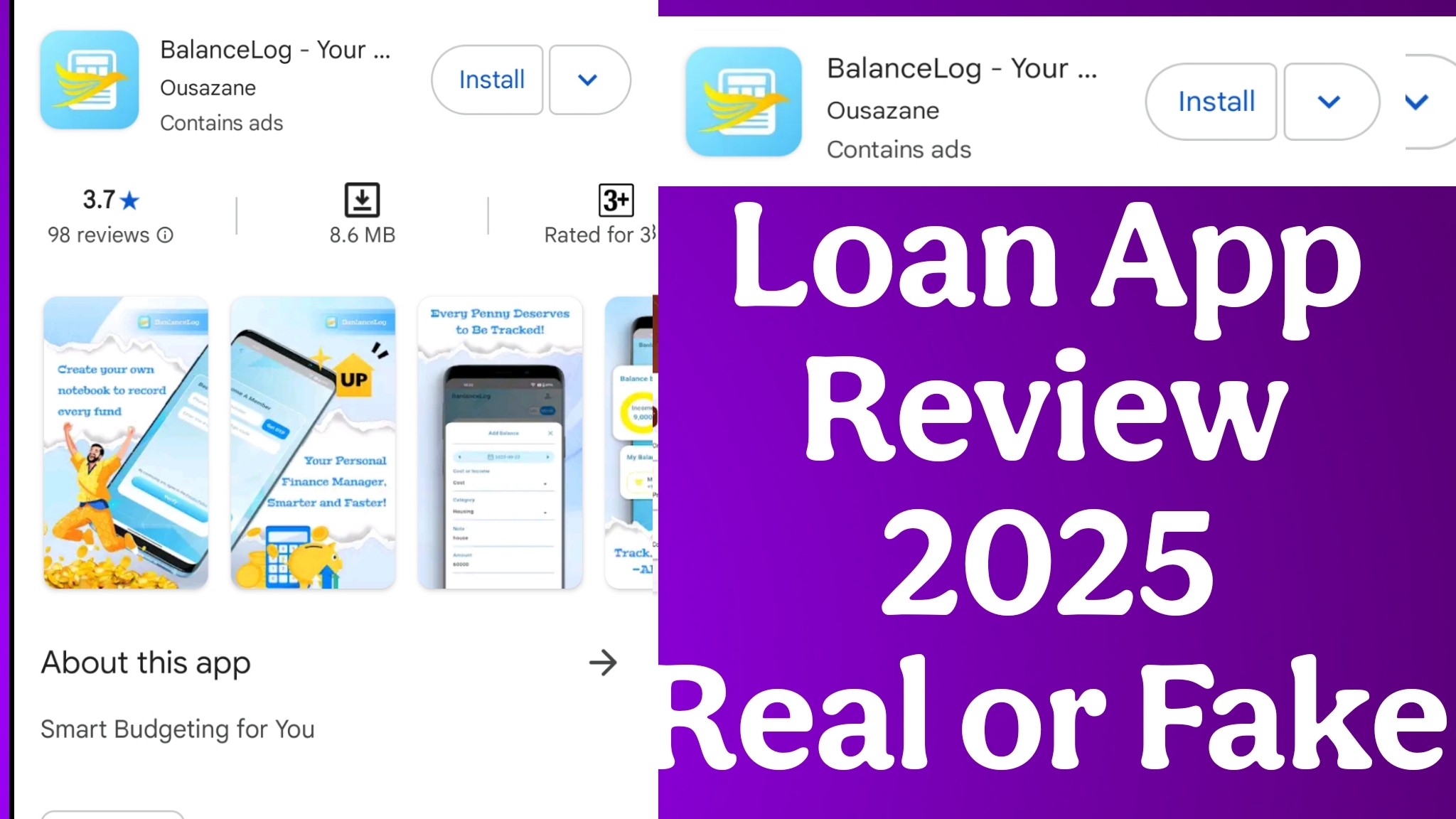
Balance Log Loan App Review 2025: A Deep Dive into Customer Complaints, High Charges, and Fraud Allegations

In the rapidly expanding world of digital lending, loan apps have become a popular choice for individuals seeking quick financial solutions. Among these, the Balance Log Loan App has gained attention, but not for the right reasons. Marketed as a budgeting and financial management tool on the Google Play Store, it presents itself as a user-friendly application akin to apps like Money Diary. However, a closer look at customer reviews and experiences reveals a troubling pattern of high charges, short repayment periods, harassment, and allegations of fraudulent practices. This article provides a comprehensive review of the Balance Log Loan App, analyzing its Play Store description, customer feedback, operational practices, and the broader implications of using such apps in 2025.

{

The Play Store Facade: A Deceptive First Impression

The Balance Log Loan App’s description on the Google Play Store paints an appealing picture of a financial management tool designed to help users track their income and expenses effortlessly. The description reads:

Smart Budgeting for You
A simple and easy-to-use tool that helps you clearly record every income and expenditure and easily grasp your financial status.
Smart settlement, clear at a glance
Automatically calculate the balance and update your financial status in real time. Income, expenditure, and balance are clear at a glance, helping you to grasp the dynamics of funds at any time!
Easy to record anytime, anywhere
Whether you are at home, in the office, or traveling, you can record income and expenditure anytime, anywhere, and never miss any financial dynamics!
Who is it suitable for?

  • Busy office workers: Quickly record daily expenses and easily manage wages and bonuses.
  • Students: Clearly grasp living expenses to avoid no balance at the end of the month.
  • Housewife/husband: Record family expenses and plan the family budget reasonably.
  • Freelancers: Track project income and expenditure and easily manage cash flow.
  • Financial management enthusiasts: Optimize investment and savings plans through detailed records and analysis.
    If you have any suggestions for our app, please contact office@markbalance.com.

This description positions Balance Log as a budgeting app, emphasizing simplicity, accessibility, and utility for diverse user groups. There’s no mention of loans, interest rates, or lending services, which is a significant red flag. Legitimate loan apps typically disclose their lending nature upfront, as required by regulatory bodies like the Reserve Bank of India (RBI). Instead, Balance Log’s description mirrors that of a financial tracking tool, potentially misleading users into downloading it under false pretenses.


The Reality: Customer Reviews Expose the Truth

While the Play Store description is polished and inviting, customer reviews from April 2025 paint a starkly different picture. Users consistently report high charges, short repayment periods, harassment, and fraudulent practices. Below is a summary of key complaints based on verified reviews:

  1. High Interest Rates and Hidden Charges
    Customers repeatedly highlight exorbitant interest rates and hidden fees. For instance, Debabrata Sarkar writes, “They did not provide loan documents, 3k sent to me and ask for 5k payment for 5 days only. It’s totally scammer.” Similarly, DEEPU Sisodia notes, “They give 1800 and wants to return 3000 after 7 days, really bad experience.” These reviews indicate that Balance Log disburses smaller amounts than promised and demands repayment with interest rates as high as 60–70% for a mere 5–7 day period. Such rates far exceed the RBI’s guidelines, which cap interest rates for regulated lenders to prevent exploitation.
  2. Short Repayment Periods
    The app’s repayment terms are another major concern. Users like Jogi Mahesh report, “They give you money 3000 and within 5 days they ask you return 5000.” Aditya Singh Rathour adds, “The loan is only for 6 days, 3000 for 6 days plus 2000 rupees, this is a fraud.” These ultra-short repayment periods (5–7 days) are characteristic of predatory lending apps, designed to trap borrowers in a cycle of debt by making timely repayment nearly impossible.
  3. Harassment and Blackmail
    Perhaps the most alarming complaints involve harassment and blackmail. Jannet Thomas shares a distressing experience: “My due is of today, I said them will be paying by today only, still they have messaged me editing my photo and harassing for making the payment, or else they will share it to my contact list.” This tactic—manipulating personal photos and threatening to share them with contacts—is a common strategy used by fraudulent loan apps to coerce repayment. Such practices violate privacy laws and RBI guidelines, which prohibit coercive recovery methods.
  4. Misleading Loan Amounts
    Several users report discrepancies between the loan amounts promised and those actually disbursed. Nitin Dharia states, “5k loan amount was shown but transfer is done 3k… repayment schedule is showing 7 days with 5k amount whereas in app it was shown that 1.5 percent per month will be interest without any processing fees.” This bait-and-switch tactic—advertising a higher loan amount but disbursing less while charging interest on the larger sum—is a hallmark of scam apps.
  5. Lack of Transparency
    The absence of loan agreements or clear terms is another recurring issue. Debabrata Sarkar notes, “They did not provide loan documents.” Legitimate lenders are required to provide detailed loan agreements outlining interest rates, repayment schedules, and fees. Balance Log’s failure to do so suggests an intent to obscure its predatory terms.
  6. Fraud Allegations and Cybercrime Reports
    Users like Nitin Dharia have taken action, stating, “I have already registered online complaints in cyber crime and also will try registering complaints on other platforms.” Vikram D goes further, alleging, “A misleading app, seems to work on behalf of anti-nationals and Pakistan.” While such claims may reflect frustration rather than evidence, they underscore the depth of distrust and anger among users.

How Balance Log Operates: A Predatory Model

Based on customer reviews and industry patterns, Balance Log appears to follow a predatory lending model common among fraudulent loan apps. Here’s how it likely operates:

  1. Deceptive Marketing
    The app masquerades as a budgeting tool to attract unsuspecting users. Once installed, it prompts users to provide personal details (Aadhaar, PAN, selfies) and access to contacts and photos, often under the guise of financial tracking. These permissions are then exploited for lending and recovery purposes.
  2. Quick Loan Disbursal with Hidden Costs
    Balance Log offers small loans (₹1,800–₹3,000) with minimal documentation, appealing to users in urgent need. However, the disbursed amount is lower than promised, and the repayment amount includes steep interest and processing fees. For example, a ₹3,000 loan may require ₹5,000 repayment within 5–7 days, equating to an annualized interest rate far exceeding RBI’s fair lending standards.
  3. Coercive Recovery Tactics
    When borrowers fail to repay on time, the app resorts to harassment, including abusive calls, threatening messages, and blackmail. By accessing users’ contact lists and photos, Balance Log threatens to defame borrowers, creating psychological pressure to repay at any cost.
  4. Debt Trap Cycle
    The short repayment period and high charges make default likely. Borrowers are then pushed to take additional loans to cover existing debts, trapping them in a cycle of borrowing and repayment that is difficult to escape.

Regulatory Context and RBI Guidelines

The RBI has taken steps to curb predatory lending apps in India, issuing guidelines in April 2023 to enhance transparency in digital lending. Key regulations include:

  • Mandatory Disclosure: Lenders must provide clear loan agreements detailing interest rates, fees, and repayment terms.
  • Data Privacy: Apps cannot store or access data beyond minimal personal details (name, address, contact info) without consent.
  • Fair Recovery Practices: Coercive methods like harassment or blackmail are prohibited.
  • RBI Whitelist: The RBI is compiling a list of approved loan apps for Google Play and Apple App Stores.

Balance Log violates these guidelines by failing to provide loan agreements, charging exorbitant rates, accessing sensitive data, and using coercive recovery tactics. Its presence on the Play Store, despite these violations, highlights gaps in app store vetting processes. In FY23, the RBI reported 1,062 complaints against fraudulent loan apps, and Google removed 134 such apps in a single week in September 2023, indicating the scale of the problem.


Comparing Balance Log to Legitimate Loan Apps

To understand Balance Log’s shortcomings, let’s compare it to RBI-approved loan apps like Paytm, Bajaj Finserv, and MoneyTap, which are recommended for 2025.

  • Interest Rates: Legitimate apps offer rates starting at 11.99–36% per annum, with clear disclosure. Balance Log’s effective rates exceed 60% for a 5–7 day period.
  • Repayment Terms: Approved apps provide flexible tenures (3 months to 5 years). Balance Log’s 5–7 day terms are predatory.
  • Transparency: Legitimate apps provide detailed loan agreements and customer support. Balance Log lacks both.
  • Recovery Practices: Approved apps adhere to RBI’s fair recovery guidelines. Balance Log uses harassment and blackmail.

Customer Experiences: A Closer Look

The reviews reflect not just financial loss but emotional distress. Jannet Thomas’s account of being blackmailed with edited photos highlights the psychological toll of such apps. DEEPU Sisodia expresses frustration at the app’s disregard for borrowers’ hardships: “How hard to earn money, they don’t know.” These experiences align with broader trends reported by organizations like the Loan Consumer Association (LCA), which notes that 90% of victims of illegal loan apps suffer clinical depression and distress.


How to Protect Yourself from Apps Like Balance Log

Given the risks associated with Balance Log, here are steps to avoid falling victim to similar apps:

  1. Verify RBI Registration: Check if the app is linked to an RBI-registered NBFC or bank. Balance Log’s lack of such affiliation is a red flag.
  2. Read Reviews: Scrutinize user reviews for complaints about high charges or harassment. Balance Log’s reviews are overwhelmingly negative.
  3. Check Permissions: Avoid apps requesting access to contacts, photos, or location. Balance Log’s excessive permissions are a warning sign.
  4. Demand Transparency: Insist on clear loan agreements before borrowing. Balance Log’s failure to provide these is a dealbreaker.
  5. Report Fraud: If victimized, file complaints with the National Cyber Crime Reporting Portal (cybercrime.gov.in) or local cybercrime units.

Conclusion: Steer Clear of Balance Log

The Balance Log Loan App exemplifies the dangers of predatory lending in the digital age. Its deceptive Play Store description, coupled with customer reports of high charges, short repayment terms, harassment, and fraud, makes it a risky choice for borrowers. In 2025, with RBI regulations tightening and consumer awareness growing, apps like Balance Log face increasing scrutiny. However, their persistence on platforms like the Play Store underscores the need for vigilance.

For those seeking quick loans, stick to RBI-approved apps like Paytm, Bajaj Finserv, or MoneyTap, which offer transparency, fair terms, and ethical practices. If you’ve encountered Balance Log or similar apps, report them to cybercrime authorities to protect others. In the world of digital lending, knowledge and caution are your best defenses against scams.